- The Chronicles Newsletter
- Posts
- Barking at the Window
Barking at the Window
Why It Happens—and How to Train It Out

Greg Burke
January 01, 2026
If you’re new here, welcome. I share my life (and furniture) with three Shetland Sheepdogs who somehow manage to be both brilliant and deeply unhelpful at the same time. Biscuit leads with confidence, Cricket leads with logic, and Kevin leads by example—mostly toward the nearest nap. They’re the reason most of these articles exist in the first place.
The Chronicles Newsletter publishes the First and Third Thursday of every month.

Calm their inner watchdog while keeping your sanity intact
If you live with a dog, chances are you also live with a window that has become a high-traffic security checkpoint.
A jogger passes.
A stroller rolls by.
A neighbor commits the unforgivable crime of walking on the sidewalk.
Bark. Bark. Bark.
For Sheltie households in particular, this scenario feels less like a coincidence and more like a job description. And while it’s easy to label window barking as “bad behavior,” the truth is far more interesting—and far more fixable.
Why Dogs Bark at the Window
(It’s Not Just Because we’re Dogs)
At its core, window barking is a combination of territorial instinct, visual triggers, and reinforcement history.
Dogs evolved to notice movement. Windows are essentially giant motion screens showing unpredictable activity, often right at eye level. Every passerby activates your dog’s natural “alert” system.
Add in a few key factors:
Territory: Your dog views your home—and often the sidewalk in front of it—as theirs.
Unclear outcomes: The person always leaves (which your dog may believe is because of the barking).
Adrenaline: Barking releases energy and stress hormones. It feels productive.
From your dog’s perspective, this is a wildly successful system.
🐾 A Quick Cricket Interlude 🐾
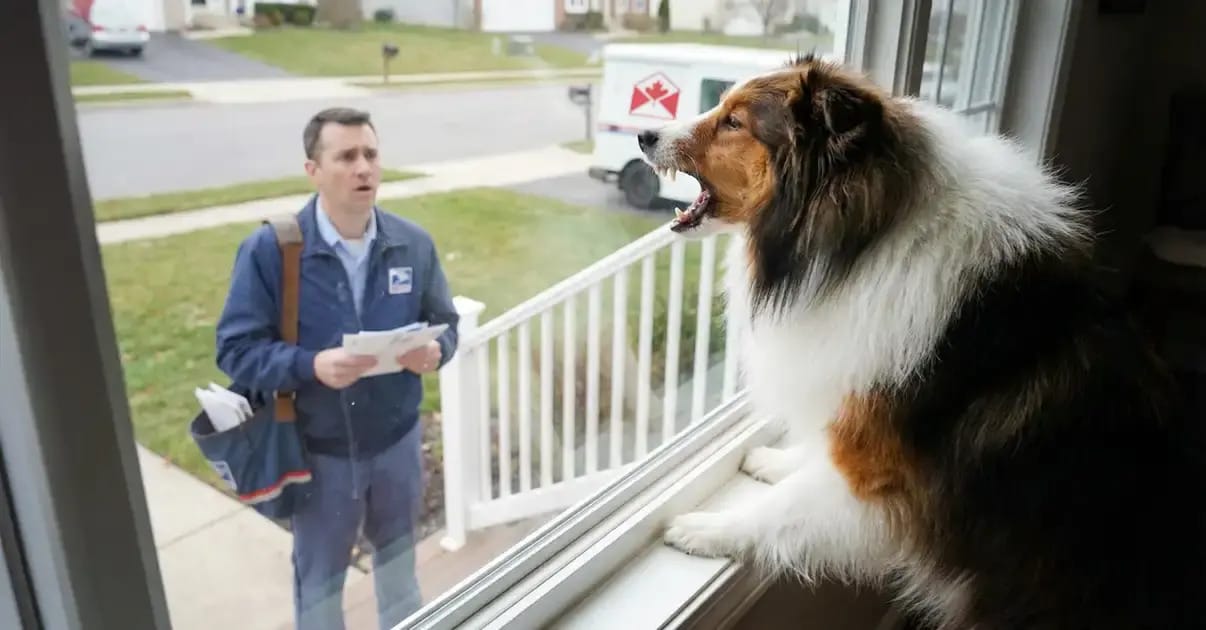
Cricket is the quiet one—until she isn’t. She’ll sit calmly by the window, ears tipped, watching. Waiting. Calculating. And then, the moment someone crosses an invisible line only she understands, she announces it. Not hysterically. Professionally.
If there were a clipboard involved, I wouldn’t be surprised. And her dislike of all delivery people is truly next level.

Why Yelling “It’s Fine!” Doesn’t Work
Here’s the inconvenient truth: yelling at your dog to stop barking often adds fuel to the fire.
From your dog’s perspective, you’re:
Also reacting loudly
Facing the same direction
Seemingly participating in the alert
So while it feels like you’re correcting, your dog may interpret it as, “Yes, this is serious. Thank you for confirming.”
Not ideal.
The Goal Isn’t Silence—It’s Control
Let’s reset expectations.
You are not trying to eliminate barking entirely. Barking is communication. What you want is shorter, calmer responses and a dog who can disengage on cue.
Think: “Thanks, I’ve got it.”
Training Techniques That Actually Work
1. Block the Rehearsal
If your dog practices window barking all day, they’re getting better at it.
Use window film, curtains, or furniture rearrangement to limit direct access
Create “no-window” zones during peak activity hours
This isn’t defeat—it’s strategy.
2. Teach an Alternate Behavior
Dogs can’t bark and do something else at the same time.
Train a simple replacement:
Go to mat
Sit behind you
Check in with eye contact
Reward heavily when they choose the alternate behavior before the barking escalates.
3. Catch It Early
Once barking hits full volume, learning stops.
Watch for the pre-bark signs:
Stiffening
Ear position change
Closed mouth stare
Interrupt calmly and redirect before the explosion.

4. Desensitize the Trigger
Pair passersby with good things.
Person walks by → treat appears
Person disappears → treats stop
Over time, the emotional response shifts from alert to anticipation of reward.
This is slow work. It’s also very effective.
What Not to Do (Even Though It’s Tempting)
Don’t punish barking after the fact
Don’t rely on spray bottles or startle techniques
Don’t expect instant results
Fear-based suppression may quiet the bark, but it doesn’t change the emotion driving it. That’s how you end up with quiet dogs who are still stressed.
The Big Picture
Window barking isn’t a moral failing. It’s a dog doing what dogs have done for thousands of years—watching, alerting, protecting.
Your job isn’t to shut it down. It’s to teach your dog when to stand down.
With clear expectations, consistent training, and a little management, even the most dedicated window sentry can learn that not every passerby requires a full announcement.
And if your Sheltie still insists on keeping an eye on the neighborhood?
Well… at least someone’s taking the job seriously.
Cartoon of the Week!


Science facts, carefully sniffed and thoroughly verified
Today’s Question: Why do dogs bark so much at things outside the window?
Hello. Cricket here.
Barking is not random noise. It is a form of communication, and from a scientific perspective, it’s actually quite sophisticated.
Dogs bark more when they can see movement but cannot interact with it. Windows create a unique problem: your brain sees a person, a dog, or a squirrel, but your body cannot investigate or resolve the situation. This mismatch increases arousal and frustration, which often results in barking.
There is also a learning component. When a dog barks at someone outside and that person eventually leaves, the dog’s brain may conclude that the barking worked. This is called reinforcement, even if the human was leaving anyway.
Studies show that repeated exposure to the same trigger—without any change in outcome—can strengthen the barking response over time. In other words, practice makes louder.
Interestingly, dogs with higher intelligence and stronger herding instincts (like Shelties) are often more sensitive to movement and more motivated to monitor their environment. This makes them excellent watchdogs… and very dedicated window supervisors.
In conclusion:
Your dog is not barking to annoy you.
They are responding to visual information, stress, and learned patterns.
Understanding that is the first step toward changing it.
—Cricket ✔️
The 2026 Cricket Chronicles Calendars are HERE!
Click the Calendar Pic of your choice to get to the purchase page!


And new Merchandise Designs


Tails from the Doghouse
by Biscuit
Hello. Biscuit here.
I would like to address a serious misunderstanding currently happening in this household.
Everyone thinks the barking-at-the-window situation is a “training issue.”
Incorrect. It is a security operation.
Now, I personally do not bark at the window. I am management. I delegate. Cricket handles surveillance because she enjoys charts, patterns, and being absolutely correct about strangers.
Every day she sits at the front window like a tiny, fuzzy gargoyle, watching the sidewalk. Waiting. Listening. Judging.
Then—BOOM.
“MAILMAN.”
This is not random barking. This is a formal announcement. The mailman appears daily, which is suspicious. Why does he keep coming back? What is he planning? Why does he carry papers if not to document us?
Delivery people are worse. They drop boxes and leave. That is not normal behavior. Cricket alerts us because she cares about safety, logic, and not being surprised by cardboard.
Daddy says, “It’s okay, Cricket.”
Cricket says, “NO IT IS NOT.”
Daddy is now trying to “train it out.” He gives treats when she stops barking. I believe Cricket sees this as hazard pay. Bark. Pause. Snack. Resume watching.
Honestly, if Cricket ever didn’t bark at the window, I would be concerned. What if the mailman stole our house? What if a jogger walked by without being emotionally prepared?
So yes, training is happening.
But so is vigilance.
And if the mailman is reading this:
We see you.
The Chronicle Photo Vault
  | 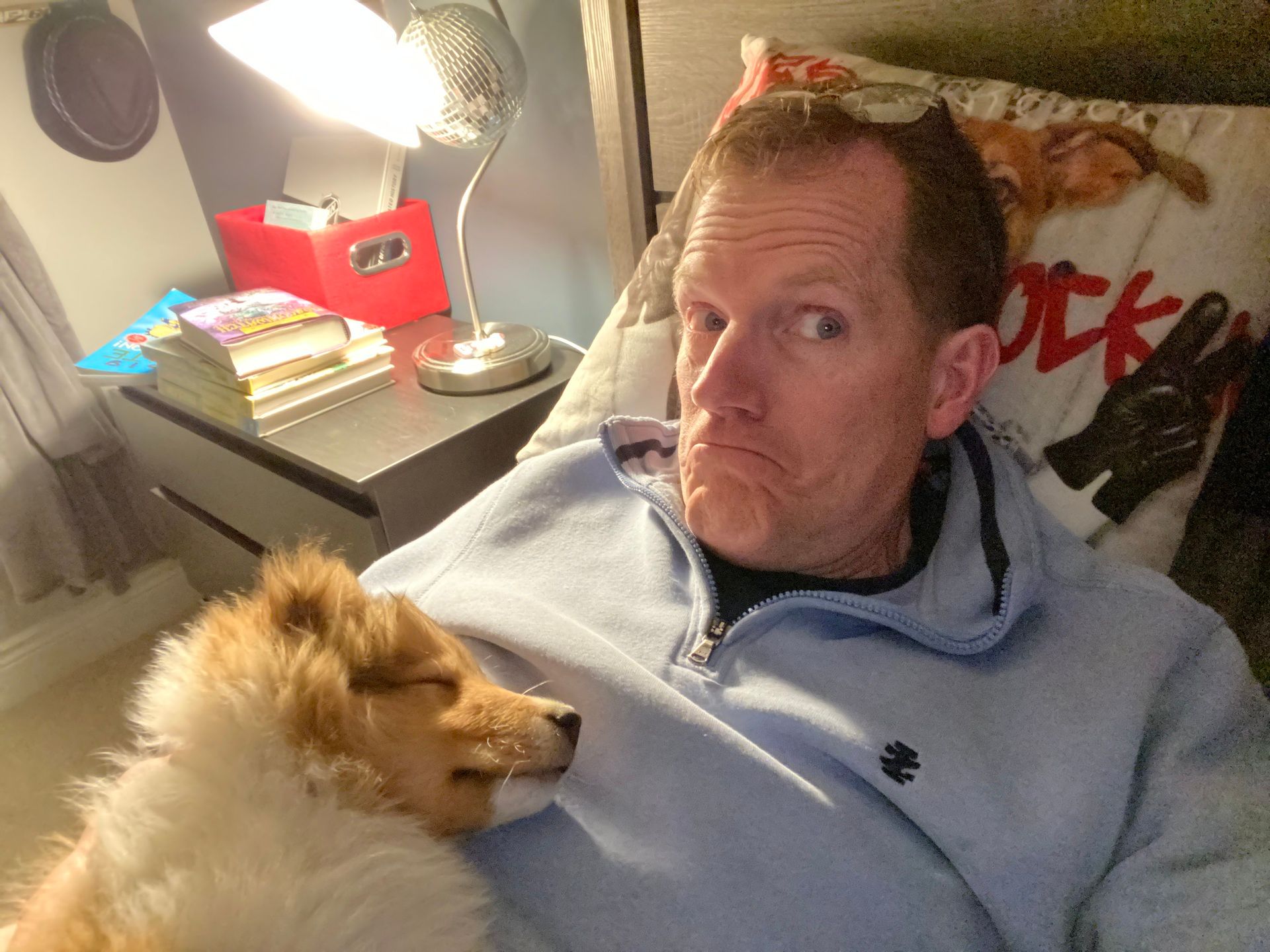  Baby Biscuit 05/22 |
Want more tips, tricks, and tail-wagging tales? Visit our blog anytime at cricketchronicles.ca!
So if Cricket has a baby one day, I’ll be an aunt if it’s a girl and an uncle if it’s a boy!
What’s New on The Cricket Chronicles
 |  |
 |  |
From the Net! Pet news!
:max_bytes(150000):strip_icc():focal(749x0:751x2)/best-pet-awards-tout210-121725-65203bf9091e4dd7b12115ddff2f7454.jpg)
:max_bytes(150000):strip_icc():focal(749x0:751x2)/bryan-reisberg071-121225-a447817a628445ac8728fa43454e6d31.jpg)
Until next time,
The Dad, the Mom and all the Pups!
The Chronicles publishes at the beginning of every month and in the middle.
Add your email to get every edition!

1